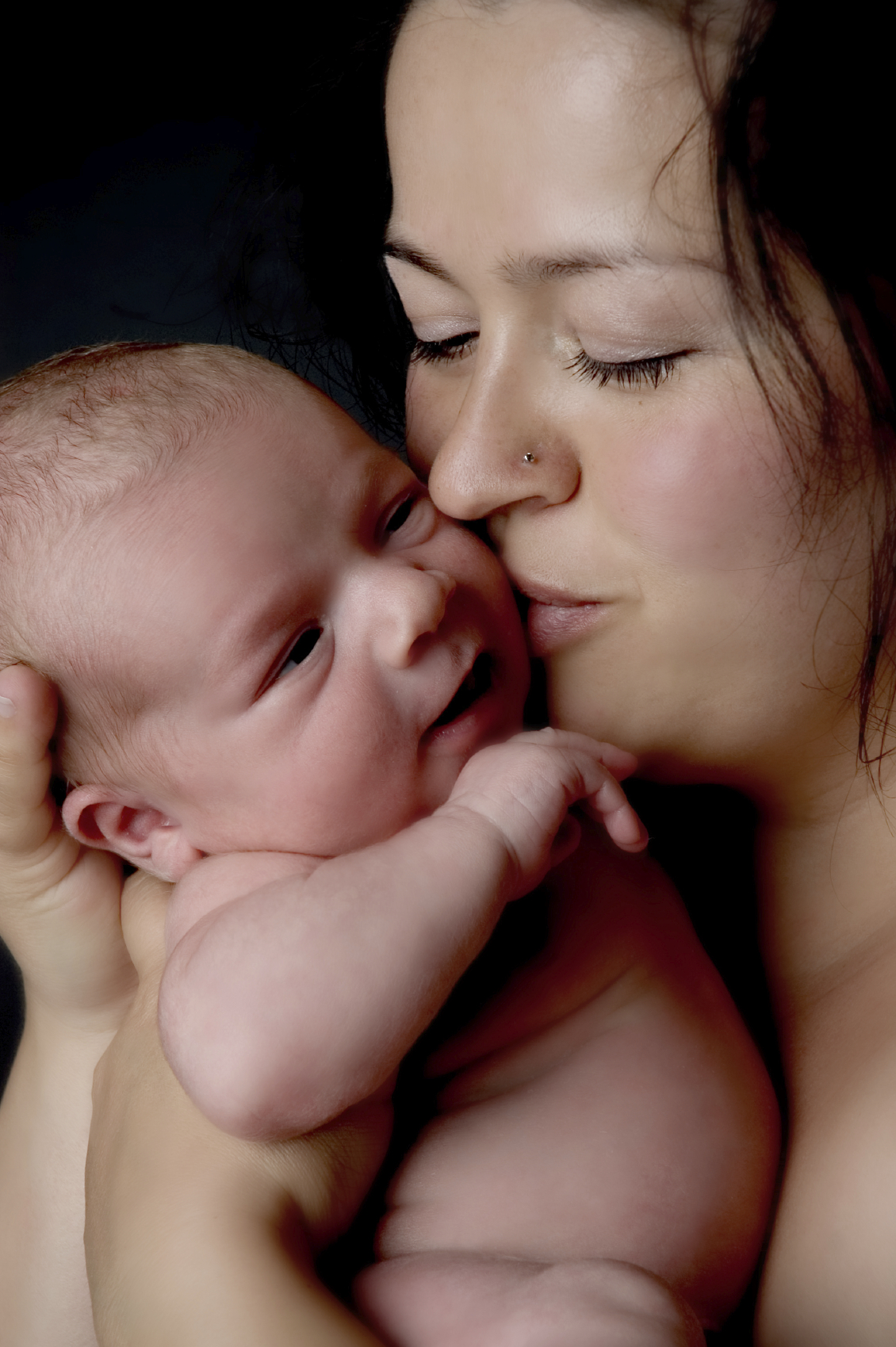
Human babies are born helpless, needing to be entirely cared for and protected. Luckily, they are born with all the necessary tools and “instructions” to attain such care for themselves, and to become a loved and loving part of their family and society.
The ingrained neural and hormonal interactions provided for parent and child to assist them in this process are among the most powerful in nature. The hormonal cues are clear and compelling and our instincts can provide us with all the appropriate responses.Without taking great efforts to avoid and ignore such urges, parents will naturally follow the advice of their neurons and hormones, nurturing their babies and maintaining physical closeness with them.
Once born, baby’s hormonal control systems and brain synapses begin to permanently organize according to the human interactions she experiences. Unneeded brain receptors and neural pathways are disposed of, while those appropriate to the given environment are enhanced.
Oxytocin: A Bonding Hormone
Oxytocin is a chemical messenger released in the brain chiefly in response to social contact, but its release is especially pronounced with skin-to-skin contact. In addition to providing health benefits, this hormone-like substance promotes bonding patterns and creates desire for further contact with the individuals inciting its release.
When the process is uninterrupted, oxytocin is one of nature’s chief tools for creating a mother. Roused by the high levels of estrogen (“female hormone”) during
pregnancy, the number of oxytocin receptors in the expecting mother’s brain multiplies dramatically near the end of her pregnancy. This makes the new mother highly responsive to the presence of oxytocin. These receptors increase in the part of her brain that promotes maternal behaviors.
Oxytocin’s first important surge is during labor. If a cesarean birth is necessary, allowing labor to occur first provides some of this bonding hormone surge (and helps ensure a final burst of antibodies for the baby through the placenta). Passage through the birth canal further heightens oxytocin levels in both mother and baby.
High oxytocin causes a mother to become familiar with the unique odor of her newborn infant, and once attracted to it, to prefer her own baby’s odor above all others’. Baby is similarly imprinted on mother, deriving feelings of calmness and pain reduction along with mom. When the infant is born, he is already imprinted on the odor of his amniotic fluid. This odor imprint helps him find mother’s nipple, which has a similar but slightly different odor. In the days following birth, the infant can be comforted by the odor of this fluid
Gradually over the next days, baby starts to prefer the odor of his mother’s breast, but continued imprinting upon his mother is not food related. In fact, formula-fed infants are more attracted (in laboratory tests) to their mother’s breast odor than to that of their formula, even two weeks after birth .
By influencing maternal behavior and stimulating milk “let down” (allowing milk to flow) during nursing, oxytocin helps make the first attempts at breastfeeding feel natural. Attempts at nursing during the initial hour after birth cause oxytocin to surge to exceptional levels in both mother and baby. Mothers who postpone nursing lose part of the ultimate hormone high provided for immediately after birth. Powerful initial imprinting for mother and baby is intended to occur chiefly so that mother and baby will be able to find and recognize each other in the hours and days after birth.
Yet a lifetime opportunity for bonding and love is not lost if this initial window is missed. Beyond birth, mother continues to produce elevated levels of oxytocin as a consequence of nursing and holding her infant, and the levels are based on the amount of such contact. This hormonal condition provides a sense of calm and well being. Oxytocin levels are higher in mothers who exclusively breastfeed than in those who use supplementary bottles. Under the early influence of oxytocin, nerve junctions in certain areas of mother’s brain actually undergo reorganization, thereby making her maternal behaviors “hard-wired.”
As long as contact with the infant remains, oxytocin causes mother to be more caring, to be more eager to please others, to become more sensitive to other’s feelings, and to recognize nonverbal cues more readily. Continued nursing also enhances this effect. With high oxytocin, mother’s priorities become altered and her brain no longer signals her to groom and adorn herself in order to obtain a mate, and thus a pregnancy. Now that the child has already been created, mom’s grooming habits are directed toward baby. High oxytocin in the female has also been shown to promote preference for whatever male is present during its surges (one good reason for dad to hang around during and after the birth). Prolonged high oxytocin in mother, father, or baby also promotes lower blood pressure and reduced heart rate as well as certain kinds of artery repair, actually reducing lifelong risk of heart disease .
Although baby makes her own oxytocin in response to nursing, mother also transfers it to the infant in her milk. This provision serves to promote continuous relaxation and closeness for both mother and baby. A more variable release of oxytocin is seen in bottle-fed infants, but is definitely higher in an infant who is “bottle-nursed” in the parents’ arms rather than with a propped bottle.
Persistent regular body contact and other nurturing acts by parents produce a constant, elevated level of oxytocin in the infant, which in turn provides a valuable reduction in the infant’s stress-hormone responses. Multiple psychology studies have demonstrated that, depending on the practices of the parents, the resulting high or low level of oxytocin will control the permanent organization of the stress-handling portion of the baby’s brain — promoting lasting “securely attached” or “insecure” characteristics in the adolescent and adult. Such insecure characteristics include anti-social behavior, aggression, difficulty forming lasting bonds with a mate, mental illness, and poor handling of stress.
When an infant does not receive regular oxytocin-producing responsive care, the resultant stress responses cause elevated levels of the stress hormone cortisol. Chronic cortisol elevations in infants and the hormonal and functional adjustments that go along with it are shown in biochemical studies to be associated with permanent brain changes that lead to elevated responses to stress throughout life, such as higher blood pressure and heart rate. Mothers can also benefit from the stress-reducing effects of oxytocin-women who breastfeed produce significantly less stress hormone than those who bottle-feed .
Nor are fathers left out of the oxytocin equation. It has been shown that a live-in father’s oxytocin levels rise toward the end of his mate’s pregnancy. When the father spends significant amounts of time in contact with his infant, oxytocin encourages him to become more involved in the ongoing care in a self-perpetuating cycle. Oxytocin in the father also in-creases his interest in physical (not necessarily sexual) contact with the mother. Nature now provides a way for father to become more interested in being a devoted and satisfied part of the family picture through his involvement with the baby.
With all of its powers, oxytocin is but one of a list of many chemicals that nature uses to ensure that baby finds the love and care he needs.
Vasopressin & Protection
Although present and active during bonding in the mother and infant, vasopressin plays a much bigger role in the father. This hormone promotes brain reorganization toward paternal behaviors when the male is cohabitating with the pregnant mother. The father becomes more dedicated to his mate and expresses behaviors of protection.
Released in response to nearness and touch, vasopressin promotes bonding between the father and the mother, helps the father recognize and bond to his baby, and makes him want to be part of the family, rather than alone. It has gained a reputation as the “monogamy hormone.” Dr. Theresa Crenshaw, author of The Alchemy of Love and Lust, says, “Testosterone wants to prowl, vasopressin wants to stay home.” She also describes vasopressin as tempering the man’s sexual drive.
Vasopressin reinforces the father’s testosterone-promoted protective inclination regarding his mate and child, but tempers his aggression, making him more reasonable and less extreme. By promoting more rational and less capricious thinking, this hormone induces a sensible paternal role, providing stability as well as vigilance.
Prolactin & Behavior
Prolactin is released in all healthy people during sleep, helping to maintain reproductive organs and immune function. In the mother, prolactin is released in response to suckling, promoting milk production as well as maternal behaviors. Prolactin relaxes mother, and in the early months, creates a bit of fatigue during a nursing session so she has no strong desire to hop up and do other things.
Prolactin promotes caregiving behaviors and, over time, directs brain reorganization to favor these behaviors . Father’s prolactin levels begin to elevate during mother’s pregnancy, but most of the rise in the male occurs after many days of cohabitation with the infant.
As a result of hormonally orchestrated brain reorganization during parenthood, prolactin release patterns are altered. It has been shown that fathers release prolactin in response to intruder threats, whereas childless males do not. On the other hand, nursing mothers do not release prolactin in response to loud noise, whereas childless females do. In children and non-parents, prolactin surges are related to stress levels, so it is generally considered a stress hormone. In parents, it serves as a parenting hormone.
Elevated prolactin levels in both the nursing mother and the involved father cause some reduction in their testosterone levels, which in turn reduces their libidos (but not their sexual functioning). Their fertility can be reduced for a time as well. This reduction in sexual activity and fertility is entirely by design for the benefit of the infant, allowing for ample parental attention and energy. When the father is intimately involved with the infant along with the mother, there should be some accord between the desires of the two, and oxytocin and other chemicals provide for heightened bonding and non-sexual interest in each other, which serves to retain a second devoted caretaker for the infant.
Opioids & Rewards
Opioids (pleasure hormones) are natural morphine-like chemicals created in our bodies. They reduce pain awareness and create feelings of elation. Social contacts, particularly touch-especially between parent and child- induce opioid release, creating good feelings that will enhance bonding. Odor, taste, activity, and even place preferences can develop as the result of opioid release during pleasant contacts, and eventually the sight of a loved one’s face stimulates surges. Opioid released in a child’s brain as a conditioned response to a parent’s warm hugs and kisses can be effective for helping reduce the pain from a tumble or a disappointment.
Parents “learn” to enjoy beneficial activities such as breastfeeding and holding, and infants “learn” to enjoy contact such as being held, carried, and rocked, all as a response to opioid release. Babies need milk, and opioids are nature’s reward to them for obtaining it, especially during the initial attempts. The first few episodes of sucking organize nerve pathways in the newborn’s brain, conditioning her to continue this activity. This is the reason that breastfed babies sometimes have trouble if they are given bottles in the newborn nursery-early exposure to bottles creates a confusing association of pleasure with both bottle nipples and the mother’s breast. In fact, any incidental sensations experienced during rocking, touching, and eating that aren’t noxious can become part of a child’s attachment and will provide comfort. It could be the warmth of mother’s body, father’s furry chest, grandma’s gentle lullaby, a blanket, or the wood-slatted side of a crib.
Prolonged elevation of prolactin in the attached parent stimulates the opioid system, heightening the rewards for intimate, loving family relationships, possibly above all else. Just as with codeine and morphine, tolerance to natural opioids can occur, which will reduce the reward level for various activities over time. But this is not a problem for attached infants and parents, because higher levels of oxytocin, especially when created through frequent or prolonged body contact, actually inhibit opioid tolerance , protecting the rewards for maintaining close family relationships. On the other hand, consuming artificial opioid drugs replaces the brain’s need for maintaining family contacts.
Once a strong opioid bonding has occurred, separation can become emotionally upsetting, and in the infant possibly even physically uncomfortable when opioid levels decrease in the brain, much like the withdrawal symptoms from cocaine or heroin. When opioid levels become low, one might feel like going home to hold the baby or like crying for a parent’s warm embrace, depending on your point of view. Sometimes alternate behaviors are helpful. For instance, thumb-sucking can provide some relief from partial or total withdrawal from a human or rubber nipple and can even provide opioid-produced reminiscences for a time.
Norepinephrine & Learning
Breastfeeding also causes dopamine and its product, norepinephrine (adrenaline), to be produced, which help maintain some of the effects of the early bonding. They enhance energy and alertness along with some of the pleasure of attachment.
Norepinephrine helps organize the infant’s stress control system, as well as other important hormonal controls in accordance with the nature of the early rearing experiences. It promotes learning about the environment-especially learning by memorization that is carried out by oxytocin, opioids, and other chemical influences.
Pheromones & Basic Instincts
How does the man’s body know to initiate hormonal changes when he is living with a pregnant female? How can an infant accurately interpret mother’s “odors” that adults often can barely detect? The answer is pheromones. Among other things, pheromones are steroid hormones that are made in our skin. Our bodies are instinctually programmed to react accordingly when we detect these pheromones around us.
Newborns are much more sensitive to pheromones than adults. Unable to respond to verbal or many other cues, they apparently depend on this primitive sense that controls much of the behavior of lower animals. Most likely the initial imprinting of baby to odors and pheromones is not just a matter of preferring the parents’ odors, but is a way nature controls brain organization and hormonal releases to best adapt baby to its environment. Baby’s earliest, most primitive experiences are then linked to higher abilities such as facial and emotional recognition. Through these, baby most likely learns how to perceive the level of stress in the caretakers around her, such as when mother is experiencing fear or joy. Part of an infant’s distress over separation may be caused by the lost parental cues about the safety of her environment. Of course the other basic sensation an infant responds to well is touch, and coincidentally, body odors and pheromones can only be sensed when people are physically very near each other.
What the World Needs Now . . .
Infants universally cry when laid down alone. If we allow ourselves to listen, our neurons and hormones encourage us in the proper response. Babies are designed to be frequently fed in a fashion that requires skin-to-skin contact, holding, and available facial cues. Beneficial, permanent brain changes result in both parent and infant from just such actions. Contented maternal behaviors grow when cues are followed. The enhancement of fatherhood is strongly provided for as well. A father’s participation encourages his further involvement and creates accord between father and mother. Frequent proximity and touch between baby and parents can create powerful family bonding-with many long-term benefits.
Sadly, over the last century parents have been encouraged by industry-educated “experts” to ignore their every instinct to respond to baby’s powerful parenting lessons. Psychologists, neurologists, and biochemists have now confirmed what many of us have instinctually suspected: that many of the rewards of parenthood have been missed along the way, and that generations of children may have missed out on important lifelong advantages.
Endnotes
1. T.R. Insel, “Oxytocin – a neuropeptide for affiliation: evidence from behavioral, receptor autoradiographic, and comparative studies,” Psychoneuroendocrinology 17, no. 1 (1992): 3-35.
2. H. Varendi et al., “Soothing effect of amniotic fluid smell in newborn infants,” Early Hum Dev (Estonia) 51, no. 1 (Apr 1998): 47-55.
3. R.H. Porter et al., “An assessment of the salient olfactory environment of formula-fed infants,” Physiol Behav 50, no. 5 (Nov 1991): 907-11.
4. S.S. Knox and K. Uvnas-Moberg, “Social isolation and cardiovascular disease: an atherosclerotic pathway?” Psychoneuroendocrinology 23, no. 8 (Nov 1998): 877-90.
5. M. Altemus et al., “Suppression of hypothalamic-pituitary-adrenal axis responses to stress in lactating women,” J Clin Endocrinol Metab 80, no. 10 (Oct 1995): 2965-9
6. R.S. Bridges, “The role of lactogenic hormones in maternal behavior in female rats,” Acta Paediatr Suppl 397 (Jun 1994): 33-9.
7. G.L. Kovacs et al., “Oxytocin and addiction: a review,” Psychoneuroendocrinology (Hungary) 23, no. 8 (Nov 1998): 945-62.
8. G.W. Kraemer et al., “A longitudinal study of the effect of different social rearing conditions on cerebrospinal fluid norepinephrine and biogenic amine metabolites in rhesus monkeys,” Neuropsychopharmacology 2, no. 3 (Sep 1989): 175-89